
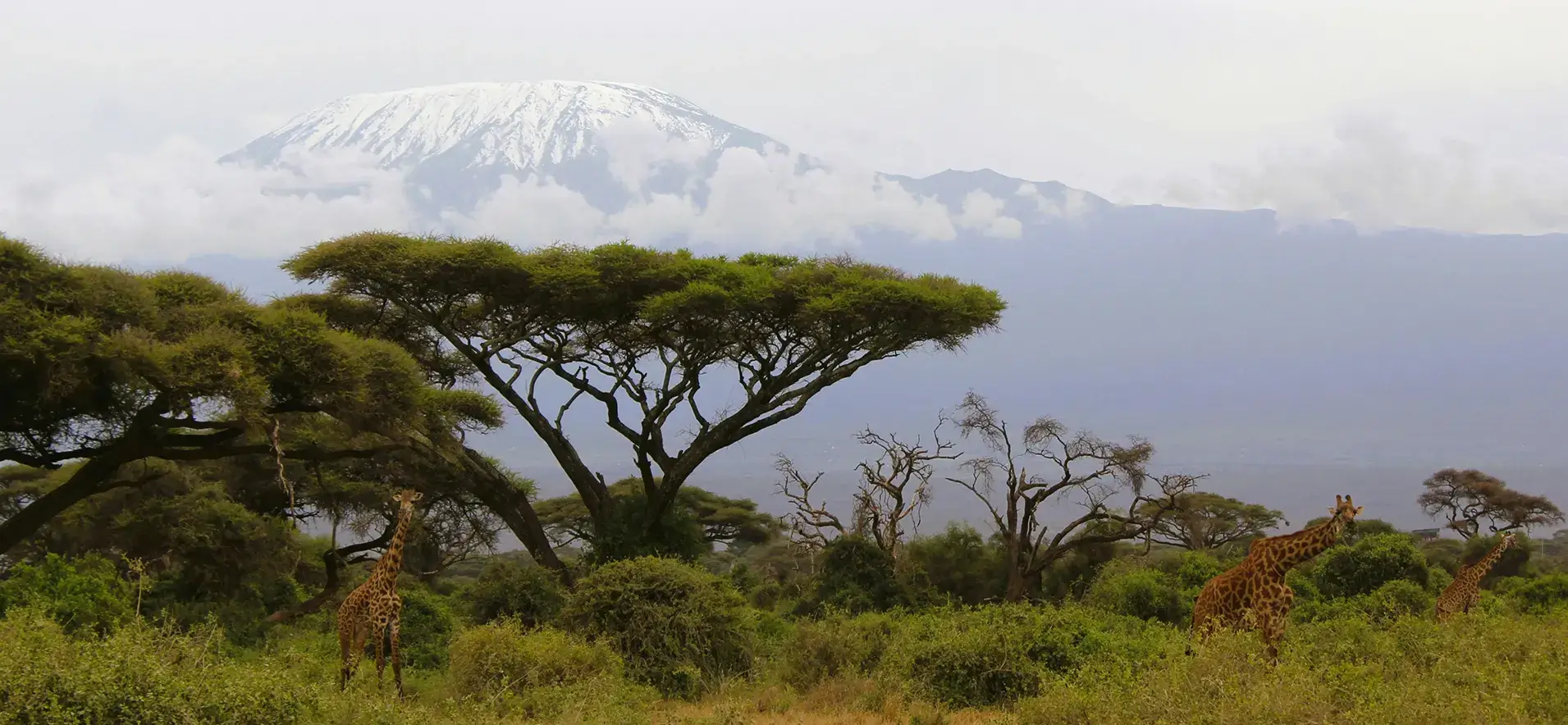
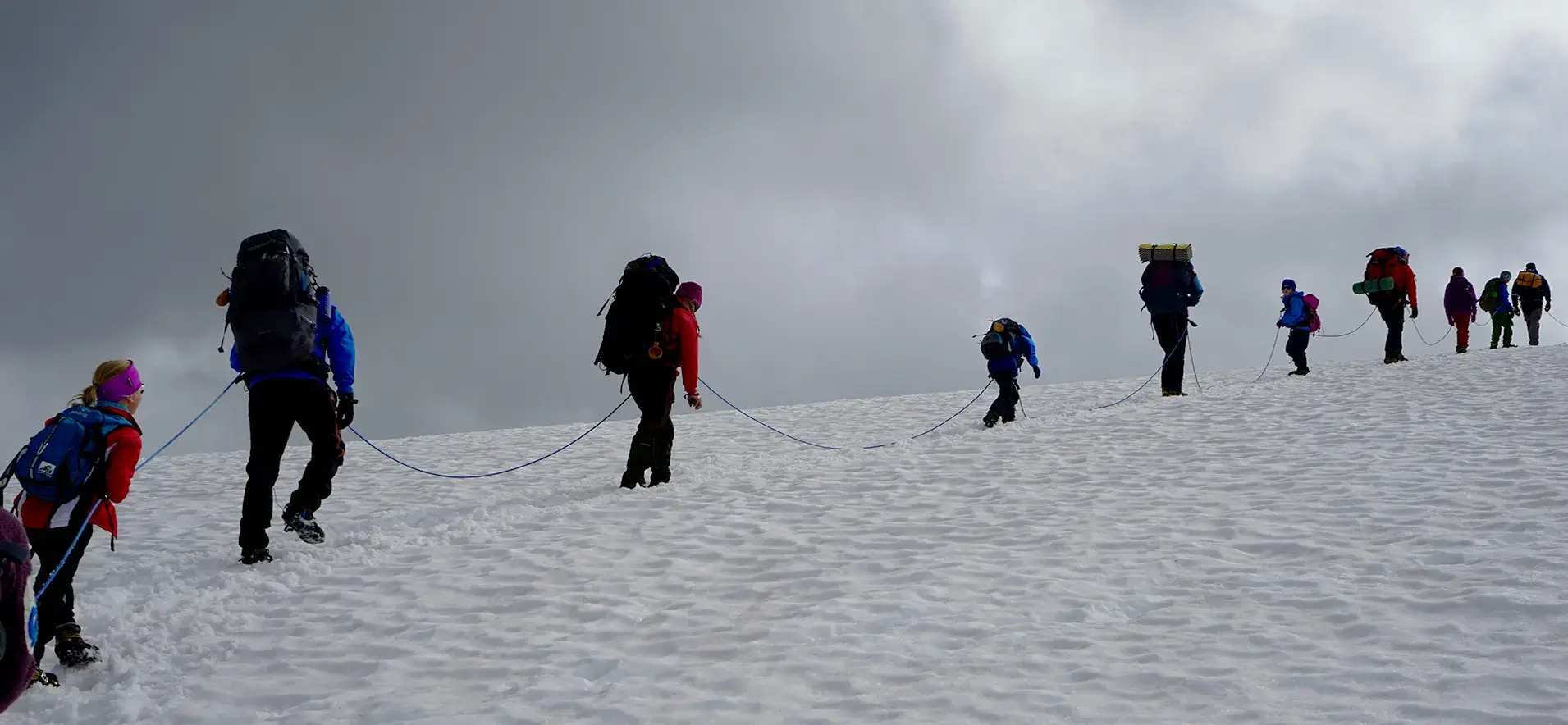
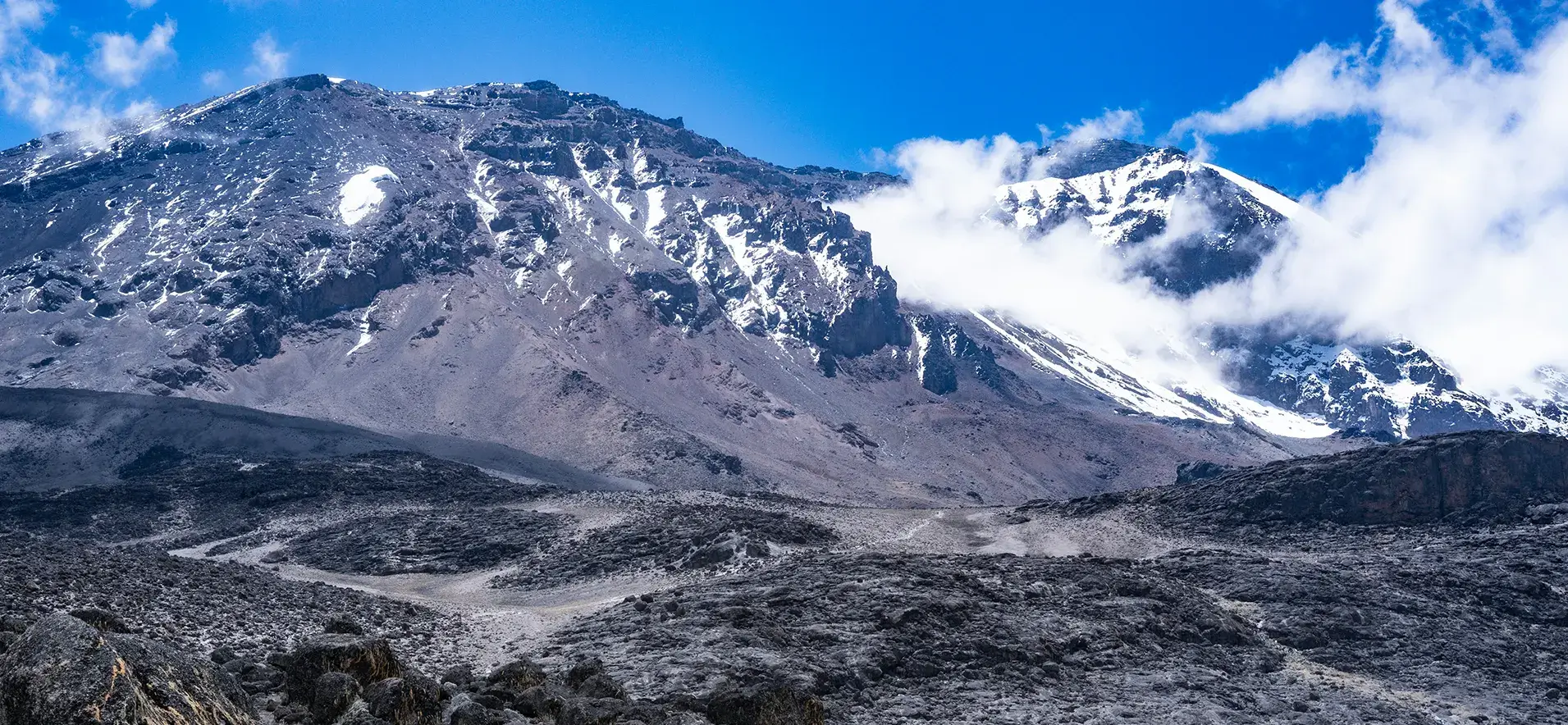
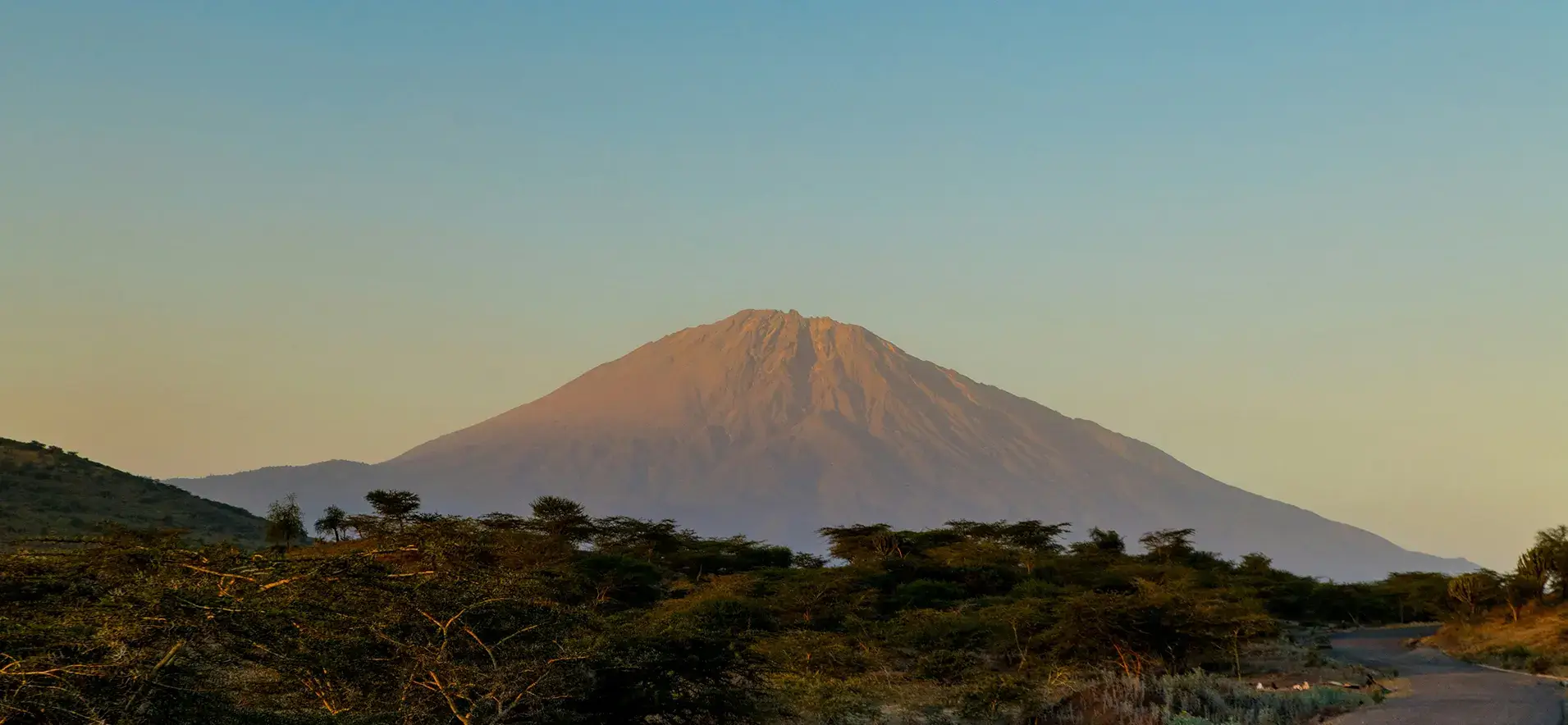
Route choice is mostly a trade-off between crowding, scenery, and how many nights you spend acclimatising before summit night. We'll talk you through which fits your timeline and fitness.
The most scenic approach, entering through rainforest on the western side with wide ridge walks and low traffic for the first few days.
More InfoThe most scenic approach, entering through rainforest on the western side with wide ridge walks and low traffic for the first few days.
The most popular route — the "Whiskey Route" — climbing through five distinct ecological zones with strong acclimatisation via Barranco Wall.
More InfoThe most popular route — the "Whiskey Route" — climbing through five distinct ecological zones with strong acclimatisation via Barranco Wall.
The longest and quietest route, circling the mountain's northern slopes for the best acclimatisation profile of any itinerary we run.
More InfoThe longest and quietest route, circling the mountain's northern slopes for the best acclimatisation profile of any itinerary we run.
Approaching from the north near the Kenyan border — drier, gentler gradients, and the only route descending a different path than it climbs.
More InfoApproaching from the north near the Kenyan border — drier, gentler gradients, and the only route descending a different path than it climbs.
The only route with hut accommodation instead of tents — a shorter, more direct climb best suited to hikers who want simpler logistics.
More InfoThe only route with hut accommodation instead of tents — a shorter, more direct climb best suited to hikers who want simpler logistics.
The steepest and most direct line up the mountain — for experienced trekkers prioritising a quieter trail over acclimatisation time.
More InfoThe steepest and most direct line up the mountain — for experienced trekkers prioritising a quieter trail over acclimatisation time.
Approaching from the north near the Kenyan border — drier, gentler gradients, and the only route descending a different path than it climbs.
More InfoApproaching from the north near the Kenyan border — drier, gentler gradients, and the only route descending a different path than it climbs.
Approaching from the north near the Kenyan border — drier, gentler gradients, and the only route descending a different path than it climbs.
More InfoApproaching from the north near the Kenyan border — drier, gentler gradients, and the only route descending a different path than it climbs.
A lead guide, assistant guides, cook and porters, all registered with the national park authority and paid fair, transparent wages.
Kilimanjaro National Park entry, camping or hut fees, and rescue fees are built into every quote — no surprise line items on the mountain.
Four-season tents, a dining tent, table and chairs, and a full camp kitchen carried and set up by your crew each night.
Three cooked meals a day plus hot drinks and snacks, adjusted for altitude appetite and any dietary restrictions you flag in advance.
Pulse oximeters, oxygen, and a portable altitude chamber carried on every trek, with daily health checks from your guide.
Pickup from Kilimanjaro International Airport, pre- and post-climb hotel nights in Moshi, and transfer to your trailhead.